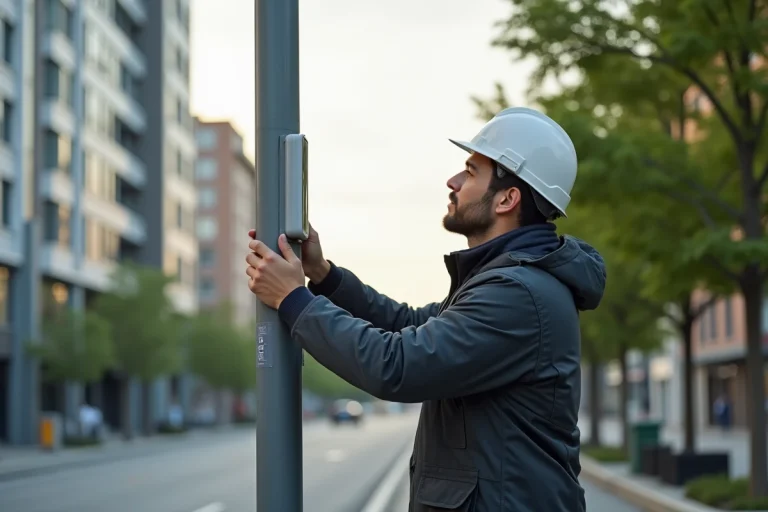
IP Address and Geolocation: What Your Connection Reveals About You
A simple technical identifier is enough to link an online activity to a specific geographic area, a city, or sometimes a street. Telecom operators and certain websites access this information in real-time, without additional consent. However, the accuracy of this location varies greatly depending on the tools and local regulations.
Specialized companies cross-reference databases to create detailed profiles from these digital identifiers. Legislation is evolving, but the commercial and security exploitation of this data remains largely unknown to the general public.
IP Address: What Your Connection Really Reveals About You
Your digital signature begins to take shape as soon as you open your browser. With each connection, your IP address marks your path and enables a more or less precise location depending on the tools, sometimes down to the street level. This unique code provided by your internet service provider establishes a direct link between your device and a specific location on the map.
This is only part of the equation. Websites assemble a puzzle of technical data: device type, network configuration, provider name. Streaming platforms, search engines, or advertisers monitor, track, and compile to shape the profile of your online usage: timings, movements, preferences.
A concrete case? Take IP 37.117.117.230. Can it be located on a map? The example illustrates both the technical challenge and the privacy issue, as European regulation frames but does not eliminate the practice. Confidentiality then depends on the seriousness with which each actor handles the collected data.
| Data Collected | Potential Use |
|---|---|
| IP Address | Geolocation, filtering, advertising targeting |
| Access Provider | Marketing segmentation, network surveillance |
| Device Type | Content adaptation, anomaly detection |
Logging into the internet is never just an innocuous data transmission; it is a part of your identity that transits and feeds, sometimes without your knowledge, detailed profiles.
Online Privacy: How to Limit the Traces Left by Your IP Address
Protecting your privacy in the digital age requires diligence. The IP address of your internet connection serves as the main identifier for websites and services eager to exploit it, whether to adjust content or refine their advertising targeting. For some, it promises better services; for others, it is the Trojan horse of overly intrusive surveillance.
Here are some concrete measures to help reduce your exposure:
- Frequently change the password of your router to counter unwanted access to your network.
- Ensure you install the latest updates for your computer’s operating system and firmware to close the gaps exploited by some malicious actors.
- Consider using a VPN: it masks your IP address and complicates the task for those trying to track your digital movements.
- Activate all available protections on your browser to curb the automated collection of your information.
Using a VPN clearly dissociates your online activity from a specific IP address. Vigilance is also necessary against the creativity of cybercriminals who do not hesitate to sell certain IP addresses on underground networks. GDPR sets the framework, but nothing beats a proactive approach to limit data exposure.
Keep control over what you allow to filter through, discipline your digital routine, and remain the master of your identity. Digital traces are not a fatality: it is up to each individual to set the threshold where they wish.
Click by click, the choice emerges: between passivity and control, where will you decide to anchor your digital life?