Everything You Need to Know About Vintage and Custom Motorcycle Passion in France
The French market for vintage and custom motorcycles is undergoing a phase of restructuring. Recent neo-retros, older models appreciating in the used market, and ready-to-install customization kits are redefining the contours of a practice that is no longer limited to restoring a vintage machine in a garage.
Neo-retro and small displacement: the segment redefining vintage motorcycles in France
Since 2023, the demand for neo-retro motorcycles with small and medium displacements (125 to 650 cm³) has been steadily increasing among French distributors. The typical profile has changed: many new license holders want the vintage style without the mechanical constraints of a true classic.
The MotoChill platform listed over 70 models in its vintage and retro categories in 2024, with a majority of neo-retro roadsters designed for easy customization. Bolt-on rear loops, universal headlight mounts, accessory plates: these motorcycles come from the factory ready to receive custom parts.
This approach marks a shift from traditional custom culture. It transitions from a mechanical project lasting several months to a step-by-step accessorization, where the seat, exhaust, handlebars, and headlight shield can be changed in a few hours. An enthusiast discovering the custom world at Motorcycle Boy will find both parts, inspiration, and mechanical bases suited to this modular logic.
Used vintage motorcycle market: rising prices and authenticity under pressure
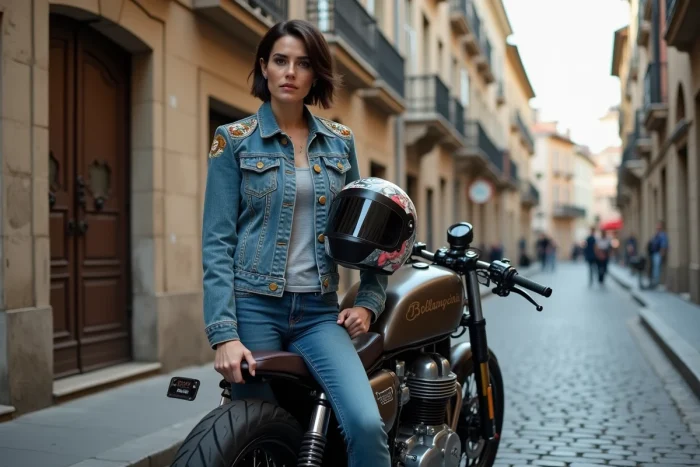
The used market for collectible motorcycles is tightening. On the Les Anciennes platform, models from before 1990 in original condition or properly restored are attracting a growing number of buyers, driving prices up, especially for Japanese bikes from the 1970s-1980s and British twins.
The authenticity of parts is becoming a key valuation criterion. An original tank, an unmodified wiring harness, or a factory carburetor can represent a significant portion of a machine’s value. Field feedback varies on this point: some purists refuse any refabricated parts, while others believe that a functional restoration with equivalent quality components remains acceptable.
This tension between strict authenticity and mechanical pragmatism structures the market into two distinct segments. On one side, collectible motorcycles with heritage value, whose worth depends on the traceability of parts. On the other, sound mechanical bases intended for custom projects where the original condition matters less than the reliability of the engine and frame.
Café racer, bobber, scrambler: what the choice of custom style reveals
The French custom culture is organized around a few major styles, each carrying a different vision of motorcycling.
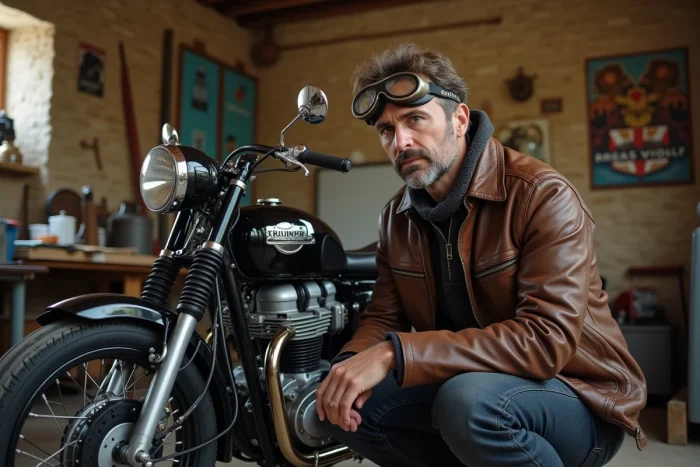
- The café racer emphasizes a sporty riding position, clip-on handlebars, and sleek lines. It remains the most represented style at French gatherings and on dedicated social media.
- The bobber pushes minimalism: shortened fenders, single-seat, maximum simplicity. Its construction requires less welding than a chopper but demands a keen sense of proportions.
- The scrambler mixes road use with the ability to ride on unpaved tracks. It is the style that has benefited the most from the neo-retro offerings of manufacturers, with recent models directly inspired by trial machines from the 1960s.
The choice of a style is not just aesthetic. It conditions the budget, the type of parts to source, and the technical difficulty of the project. A bobber based on a Japanese model costs less to build than a café racer based on a British model, primarily because Japanese engine parts remain more accessible.
Insurance and technical inspection for vintage motorcycles: the regulatory framework becoming clearer
Insurance for a vintage or custom motorcycle in France deserves special attention. Standard contracts rarely cover modifications to the frame, fork, or braking system. Several specialized insurers offer plans tailored to collectible motorcycles, with specific clauses for modified machines.
A motorcycle whose frame has been cut or extended requires a DREAL inspection for approval before it can legally be on the road. This administrative constraint, often underestimated by amateur builders, can block a custom project for several months.
The available data does not allow for a precise conclusion on the evolution of insurance rates for custom motorcycles in recent years. However, specialized forums regularly report refusals of coverage during claims involving unreported modifications. Declaring each transformation to one’s insurer remains the only reliable protection.
Points to check before modifying a motorcycle
- Compatibility of the project with the original registration document (change of type or technical characteristics)
- Need for an isolated approval (RTI) from the DREAL
- Actual coverage of the insurance contract for modified parts and replacement value
- Compliance of lighting, braking, and noise emissions with current standards
The passion for vintage and custom motorcycles in France is supported by a dense network of preparers, parts sellers, and online communities. The market is structuring, prices are rising on beautiful used bases, and the neo-retro offering makes the vintage style accessible without going through a complete restoration. However, each custom project involves technical, financial, and regulatory choices that deserve to be considered before dismantling the first bolt.