How much does it cost to convert a motorcycle into a trike? Tips and prices to consider
8,000 euros is sometimes just the beginning of the journey. Embarking on the transformation of a motorcycle into a trike quickly reveals that reality catches up with all the hopes born on forums. Quotes become heavier as technical requirements and administrative steps accumulate. Add to this the meticulous regulations: the simple addition of an axle turns into a marathon of procedures. Forgetting a budget item, and the whole adventure wobbles, between hidden costs, approvals, and adapting insurance.
Switching from two to three wheels is not just a matter of mechanics. The budget fluctuates depending on the original model, the degree of customization, and the quality of the selected parts. Taking the time to analyze each solution, weigh the alternatives, and scrutinize every detail is the best defense against disappointment. The three-wheeled road does not forgive financial improvisation.
Why transforming a motorcycle into a trike is increasingly appealing to riders
For many, the conversion of a motorcycle into a trike is no longer just a technical whim. It promises a new stability, a sense of security, and regained accessibility for those who thought they had to put away their helmets. This choice attracts far beyond the stereotypes of the solitary rider.
Among those tempted by the trike, several profiles can be found:
- long-distance travelers seeking distance without fatigue,
- comfort enthusiasts who want to avoid risky maneuvers,
- passionate individuals who adapt their motorcycle for reduced mobility without giving up pleasure.
What changes is the feeling of control: the lowered center of gravity improves road holding, reduces the fear of slipping, and encourages savoring every turn, even at low speed. The models in question are numerous: Harley Davidson, Honda Goldwing, Yamaha, and many others. On the tracks as well as in daily life, the trike offers accessible and reassuring riding. For those who see the classic two-wheeler becoming a challenge, the three-wheel option extends the passion without compromise.
The financial aspect also plays a role: choosing modification often means preserving a machine full of history, avoiding the purchase of a new trike, and opting for continuity. To quickly assess the budget, the cost of transforming a motorcycle into a trike on MTM France provides a concrete idea of the prices charged and solutions suited to different models. An appealing compromise, provided one clearly understands their needs before taking the plunge.
How much to budget for the conversion: price range, expense categories, and tips for budgeting well
Transforming a motorcycle into a trike requires a significant investment, proportional to the complexity of the operations and French regulations. The total depends on the starting model, the type of kit, and the desired level of finish, as well as the reputation of the workshop. For Harley, Goldwing, Yamaha, and other reliable brands, expect to pay between 8,000 and 18,000 € including tax, assembly included, with some flexibility depending on the extent of modifications.
To take stock, several budget items need to be anticipated:
- The trike kit, which includes axle, suspensions, transmission elements, and, depending on the configuration, a specific adaptation of the braking system;
- Labor, as installation requires real experience: every detail affects safety and compliance;
- Finishes: painting, custom bodywork, lighting modifications, and material choices;
- Administrative procedures: new registration document, compliance check with DREAL, verification of national standards.
Additionally, there is specific insurance for the trike, which is more expensive than that of a traditional two-wheeler. Before investing, a precise quote is essential: list every expense, discuss the availability of parts, the guarantees provided by the professional, and the announced timelines. The more meticulous the preparation, the fewer unpleasant surprises the project holds when the bill arrives. Anticipation remains the best ally of serenity.
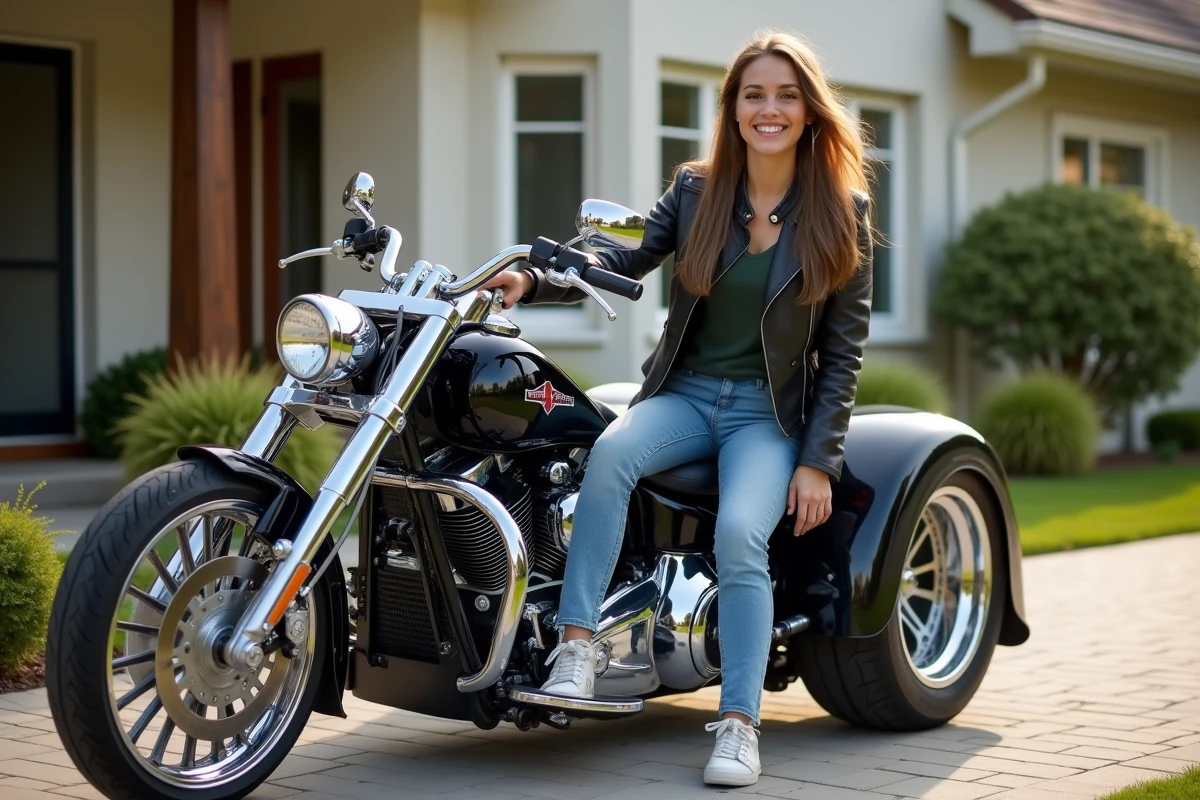
Ready-to-ride 3-wheel motorcycles: compare, test, or buy directly?
The three-wheeled motorcycle appeals with its wide range of offers and its openness to an audience coming from both two-wheels and automobiles. Before choosing, several concrete criteria must be considered:
- the proposed engine,
- the level of onboard equipment,
- the electronic aids that facilitate driving,
- the actual comfort on long trips.
Each manufacturer has its approach: the Yamaha Niken focuses on maneuverability, the Honda Goldwing on grand comfort travel, while the Tri Glide Ultra emphasizes power and a timeless style. Nothing beats a test ride in real conditions: geometry and behavior change the game compared to a classic motorcycle. Some trikes impress with their responsiveness, like the Yamaha Niken GT; others reassure, placing the rider in a position similar to that of a sports car.
Before finalizing the choice, it’s wise to compare the available options and finishes:
- planned luggage volume,
- presence of an adjustable windscreen,
- included audio system,
- onboard connectivity technology.
Now, whether aiming for a new or used trike, a leisure model or a grand touring one, the market allows for all configurations. Before committing, one must ensure national homologation, inquire about after-sales service, and check the availability of spare parts. A three-wheeled motorcycle is a long-term commitment; it’s better to have investigated the reliability of the manufacturer and carefully examined the technical specifications.
Choosing conversion or preferring a ready-made three-wheeled motorcycle means embracing a new relationship with the road. Experience cannot be improvised, but for those who approach it earnestly, the reward is very real: the freedom to push boundaries and, perhaps, to write one’s own three-wheeled journey.