A track day is not just about stringing together laps. The real value lies in parameters that most mainstream formats overlook: insurance coverage, incident protocols, equipment requirements, and educational structuring by skill level. These elements condition both the progression and the actual safety of the participant.
Motorcycle insurance on track: what your contract probably doesn’t cover
The majority of standard motorcycle contracts exclude damages incurred on track. Even when a course is presented as a safety training, insurance coverage on track is not automatic. It is important to distinguish between two scopes: civil liability (damages caused to a third party or infrastructure) and the individual protection of the rider (bodily injuries and motorcycle damage).
A valid civil liability certificate for track use, or a specific day insurance, may be required by the organizer. The FFM license, depending on the chosen formula, may include civil liability and individual accident coverage. We recommend checking these two aspects before any registration.
Exploring the benefits of a vitesseetliberte motorcycle course allows you to assess how an organizer structures risk management, beyond just the promise of adrenaline. This is a selection criterion that too many riders overlook.
Safety briefing and incident management on track
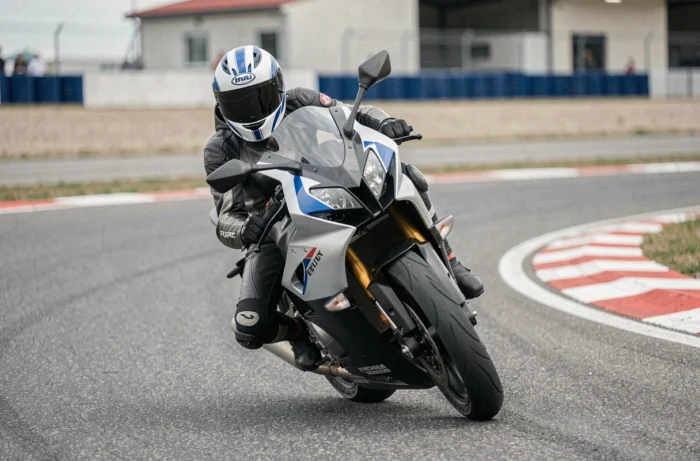
A serious motorcycle course is not limited to a trajectory briefing. Recent formats incorporate a complete operational component before the first riding session.
What a structured briefing covers
- The meaning of flags (yellow, red, black) and the expected reaction from the rider in each case, including immediate slowing down and returning to the pits
- The overtaking rules on track: authorized zones, side for overtaking, prohibition of defending one’s line as in competition
- The instructions in case of a fall, both for the concerned rider and for other participants approaching from behind
These elements do not fall under riding improvement. They constitute a operational framework that reduces the risk of collective accidents. Debriefings between sessions then allow for a review of the specific situations observed on track.
Individual or group debriefing
Post-session coaching is the moment when technical progression consolidates. An instructor who has followed the group during the session can point out a late braking, a gaze that is too short, or a hesitant re-acceleration out of a curve. This targeted feedback differentiates simple free riding from a true motorcycle riding course.
Required equipment on track: beyond the approved helmet
Equipment requirements on track go far beyond road standards. An approved helmet and gloves are not enough to access the track during a supervised course.
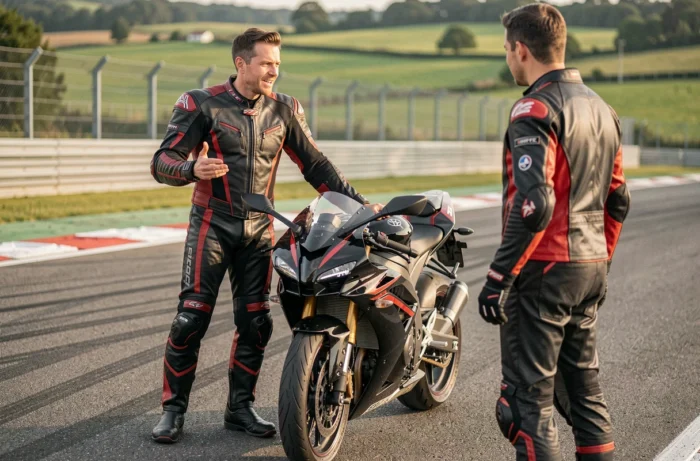
Most organizers require a leather suit, either one or two pieces connected by a 360-degree zipper. Additionally, a back protector (integrated or separate), rigid high boots, and leather gloves covering the wrist are required.
Some motorcycle courses offer rental of suits and back protectors on site. Checking this point at registration avoids unpleasant surprises on the day. Incomplete equipment will lead to denial of access to the track, with no refund in most cases.
Skill level groups and short sessions: the educational structure that changes everything
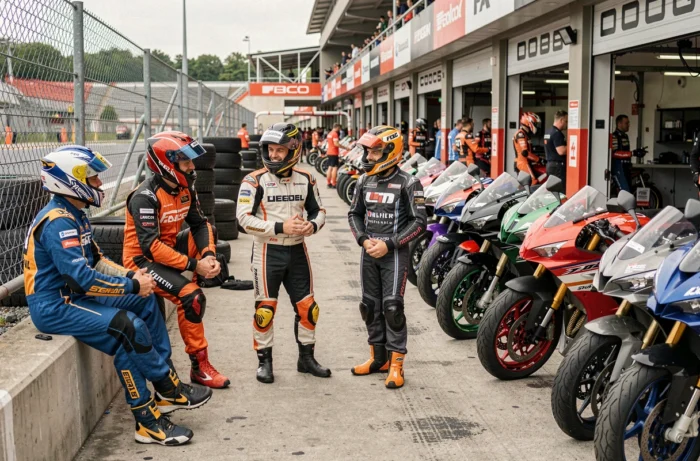
The educational format of track courses increasingly relies on distinct skill level groups and short riding sessions. This organization has a direct impact on safety and the quality of learning.
Why skill level groups matter
Mixing experienced riders and beginners in the same session creates speed gaps that multiply risky situations. A homogeneous group allows each participant to focus on their own trajectory and lean, without constantly managing overtakes by significantly faster riders.
Short sessions promote concentration and limit physical fatigue. Riding on track intensely engages the forearms, thighs, and cardiovascular system. Beyond a certain duration, clarity declines and placement errors multiply.
What this changes for a rider coming from the road
On open roads, a rider must manage traffic, intersections, and road conditions. On track, all this cognitive load disappears. The participant can finally work on their gaze, lean, and brake modulation by isolating each parameter. It is this focus that produces transferable skills later on the road.
Individualized coaching, combined with level-based riding, transforms a day on track into a true progression experience. We observe that riders returning from a track course adopt gaze placement and braking management habits that persist for several months afterward.
Choosing a motorcycle course on track is investing in an environment where safety is not a marketing argument but a concrete architecture: verified insurance, operational briefing, controlled equipment, calibrated groups. Adrenaline comes as a complement, not a replacement for this rigor.