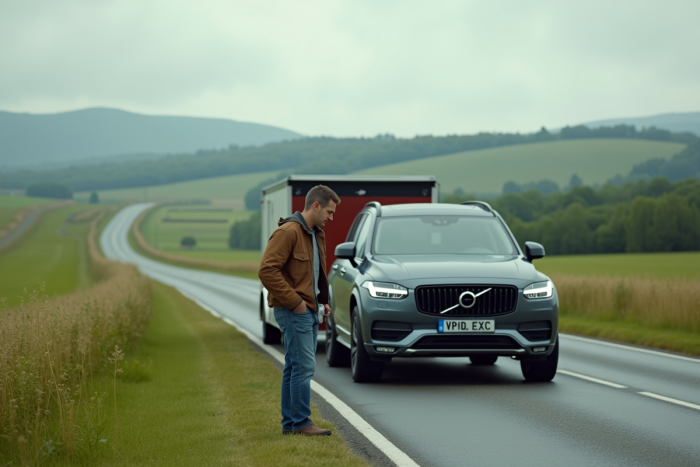
Driving and Towing: Which Vehicles Really Hold the Road?
An SUV with respectable power does not automatically guarantee suitable towing capacity. Some recent models, despite their imposing size, are limited by manufacturer rules or specific approvals, sometimes unknown to drivers.
European regulations impose strict limits, which vary according to the towed weight, the vehicle’s equipment, and the category of driving license held. Notable differences remain between vehicles that appear similar on paper, revealing significant gaps in safety and performance when towing.
Understanding true towing capacities: beyond the official figures
At first glance, the towing capacity seems easy to decipher: a net value, displayed in kilograms on the registration certificate or the technical sheet. However, the reality is much less straightforward. Manufacturers often communicate a flattering maximum towing weight without detailing the conditions under which it was obtained. To tow without unpleasant surprises, one must pay attention to the GVW (gross vehicle weight) of both the vehicle and the trailer, which, when added together, give the GTW (gross train weight). It is impossible to exceed the sum of the GVWs, regardless of the power under the hood.
The choice of engine plays a central role. A model with generous torque, often due to a multicylinder architecture, offers more responsive traction and handles long hills without flinching. The registration document specifies the approved towing capacity, but reality is also measured by the unladen weight of the towing vehicle, the configuration of the trailer, and the effective power. An SUV that boasts a flattering figure may prove less comfortable than a long chassis designed from the outset for towing.
In light of all these subtleties, many wonder: which SUV for towing 2,000 kg truly holds the road, safely and legally? Scrupulous adherence to the actual weight of the trailer, verification of the maximum towing weight, and the balance between GVW vehicle and GVW trailer become essential reflexes. Only a careful examination of the data—power, torque, gross train weight, technical specifications—avoids disappointments on open roads.
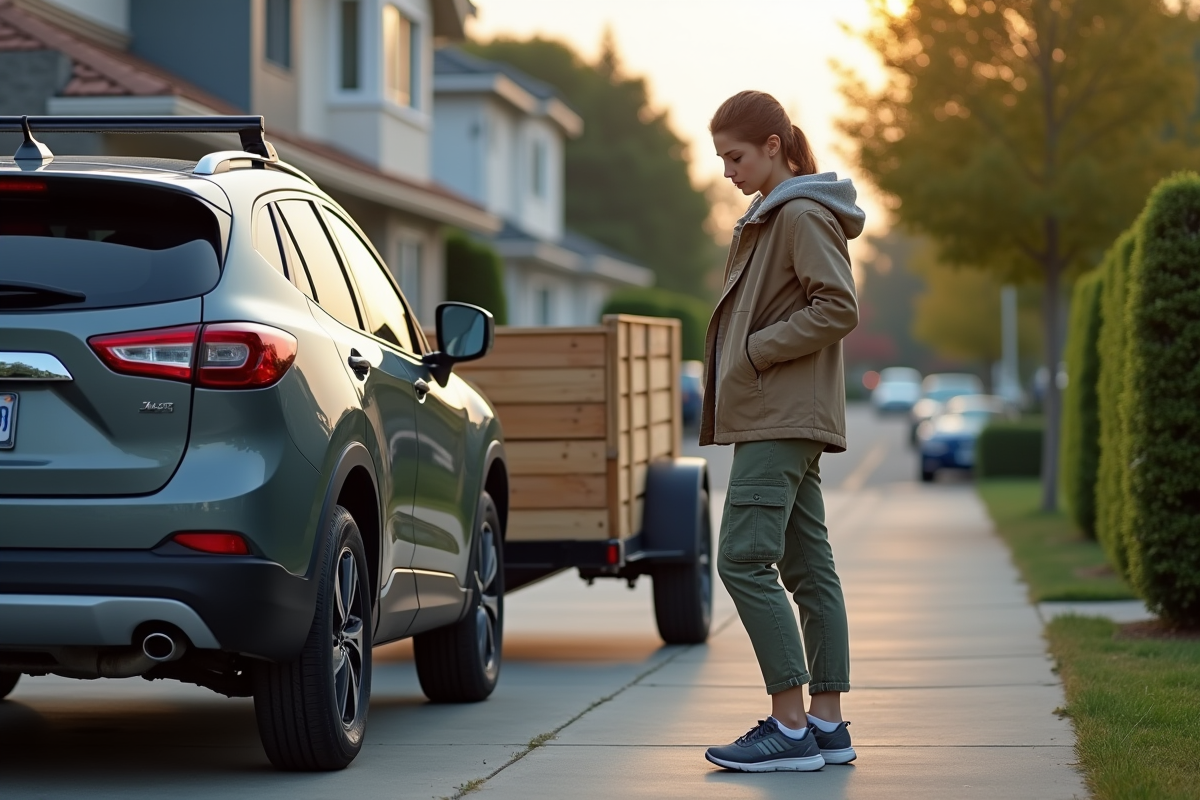
Which vehicles truly hold the road for safe towing?
In the field of towing, some vehicles stand out for their effectiveness, while others leave one perplexed due to questionable technical choices. Among the most capable models, a few common points emerge: a solid structure, a long chassis, a towing capacity validated by approval, and an engine torque available from low revs. The level of traction then depends much more on the overall balance than on the prestige of the brand.
Here are the types of vehicles that perform best for towing, based on their architecture and engine:
- Traditional 4x4s, designed to support heavy loads over long distances;
- Some generations of robust SUVs and raised station wagons, whose high unladen weight effectively stabilizes the towed unit;
- Models equipped with turbo-diesel engines, favored for their power available at low revs and their endurance, particularly in intensive use.
Diesel engines remain the benchmark for towing substantial loads, especially on long or rugged journeys, a reality well known in Canada, where towing is part of daily life.
| Vehicle | Towing Capacity | Engine Torque |
|---|---|---|
| Ford | Up to 2,500 kg | 450 Nm |
| Volvo | 2,200 kg | 420 Nm |
| Audi | 2,400 kg | 400 Nm |
| Volkswagen | 2,200 kg | 410 Nm |
| Bmw | 2,100 kg | 400 Nm |
Electric cars are progressing rapidly but remain limited by the weight of their batteries and thermal management during heavy efforts. Their towing capacity remains lower than that of thermal models, especially over long distances or with heavy loads. For a caravan trailer, it is better to prioritize consistency between GVW, GTW, and the actual power of the towing vehicle. Stability, safety, and adherence to regulations are essential allies for successful towing. On the road, nothing replaces vigilance, technical skill… and sometimes, humility in the face of the technical sheet.