Affordable Solutions for Teens Seeking Mobility
At 16, some jobs already require independent travel experience, while a large portion of minors do not have a license or a vehicle. Public transport often offers reduced fares, but these options remain inaccessible in many rural or suburban areas.
Mutual aid platforms are emerging, filling the gaps left by public policies, while local communities experiment with hybrid solutions, combining subsidies and pooling. The gap between actual needs and existing offers fuels a concrete inequality.
Why mobility remains a challenge for many adolescents today
The mobility of young people is shaped by very real obstacles, defined by geography, social environment, and family transmission. Rural and suburban areas impose their own rules: nearly seven out of ten adolescents living outside major cities rely daily on the family car. Alternatives are lacking, the public transport network leaves much to be desired or is completely absent. Parents, for their part, project their concerns: road safety tops the list of worries for 93% of them, effectively hindering children’s autonomy in public spaces.
Less than 10% of students make the journey to school alone, even as the age for the first unsupervised trip continues to rise. Major urban areas, with Paris and Seine-Saint-Denis leading the way, offer a range of transport options that facilitate freedom of movement. But everywhere, territorial disparities rage: Seine-Saint-Denis, for example, juxtaposes well-served neighborhoods with others that are isolated, where the car remains essential. In the overseas departments and regions (DROM), more than one in two school trips is made solely by car.
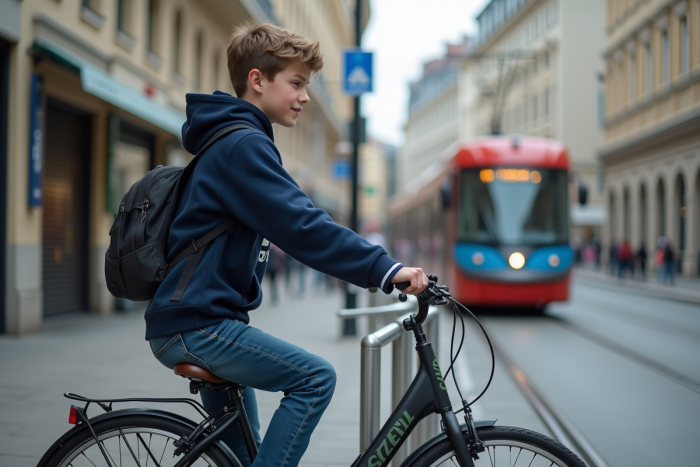
Usage is also evolving. Indeed, 85% of children have a bicycle, but only about 5% use it to get to school. For 45% of them, walking remains a daily activity, yet the car is still necessary for nearly a third. Financial constraints also play a role: nearly a quarter of students give up an activity or job due to a lack of suitable transport solutions.
Gender also shapes the relationship with mobility. Girls express more fears regarding public spaces (30%, compared to 20% for boys), while boys are seen as more exposed to road risks. Within this complex framework, some avenues are emerging, such as the possibility to obtain the BSR for free, which opens up concrete prospects for better-shared mobility.
Inspiring initiatives and economic solutions to facilitate young people’s travel
Mobility for young people is advancing at the intersection of local initiatives and collective intelligence. More and more communities are implementing mobility aids. Among the main levers deployed are:
- financing for driving licenses,
- subsidies for purchasing a bicycle,
- support for carpooling schemes.
In Île-de-France, the allocation of a €100 aid for the purchase of a mechanical bicycle for those aged 15-25 makes perfect sense. This measure addresses the need for an affordable and environmentally friendly mode of transport.
Local Missions support thousands of young people aged 18 to 25 each year, offering programs such as the “license for €1 a day,” a €500 aid for apprentices aiming for a B license, and personalized advice to organize daily trips between home, school, or work. The goal: to enable everyone to gain independence and access employment or training more easily.
The bicycle, an ecological and low-cost solution, is particularly appealing in urban areas. However, its use for school trips remains marginal, even as the network of bike lanes gradually expands. The “Knowing How to Ride a Bicycle” training already introduces younger children to active mobility and safety rules, laying the groundwork for the years to come.
To illustrate the diversity of practices, here are some striking data points:
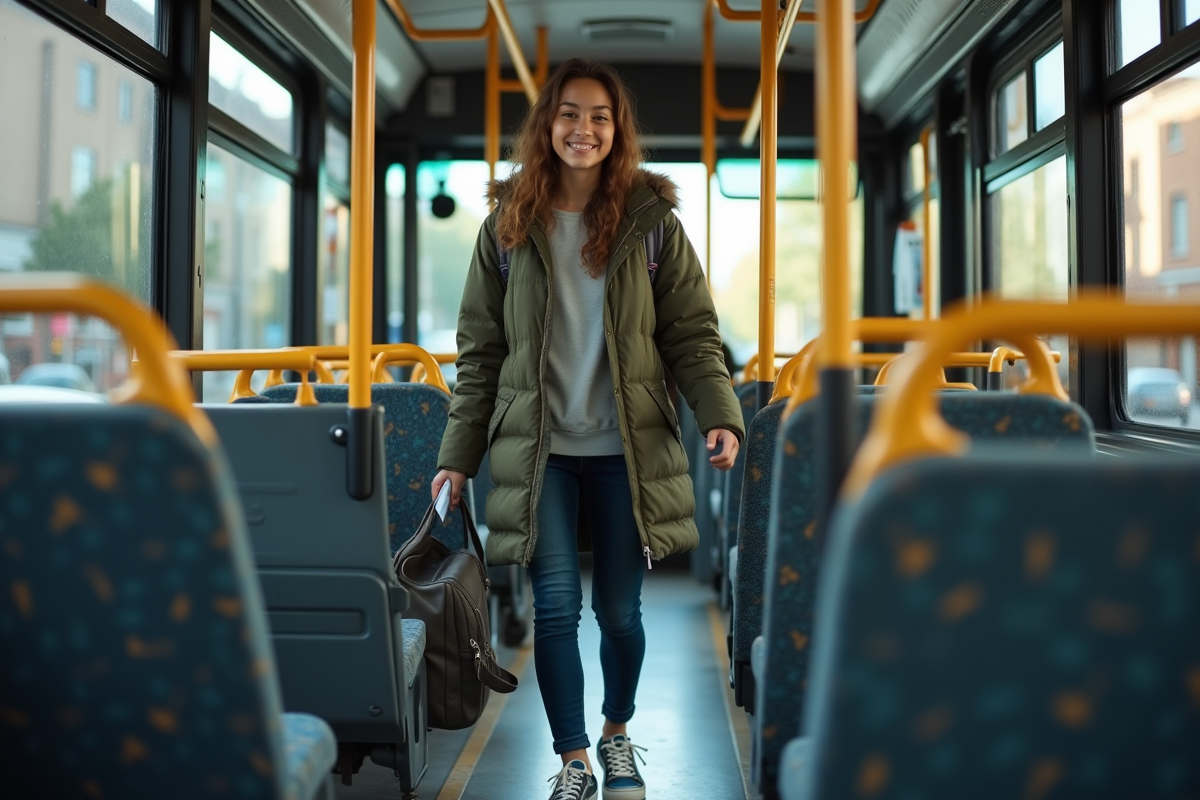
- 61% of urban Gen Z and Y individuals use shared mobility apps.
- Car-sharing services now cover 83% of medium-sized cities but remain scarce in rural areas.
Expectations are transforming: shared mobility, MaaS (“Mobility as a Service”) tools, school travel plans… Young people are challenging inherited codes, advocating for both social inclusion and sustainable mobility, far from rigid models. Solutions are emerging as demand becomes more pronounced, more inventive, more connected, and determined not to leave behind those for whom moving remains, still, a daily challenge.