Discover the Fascinating World of Contemporary Art and Emerging Artists
Contemporary art refers to artistic productions created from the second half of the 20th century to the present day. This field encompasses painting, sculpture, installation, video, performance, and hybrid forms that did not exist thirty years ago. For a fresh perspective, the challenge is not a lack of works to see, but knowing where to start.
Emerging Artists and International Fairs: How the Springboard Works
You may have noticed that certain artist names appear everywhere within a few months and then settle permanently in the gallery landscape? This mechanism is not spontaneous.
Since 2023, several major fairs like Art Basel, Frieze, or Paris+ by Art Basel have created sections dedicated to emerging artists. The principle: reduce booth fees for young galleries and offer so-called “newcomer” programs. A gallery presenting an artist at the beginning of their career pays less for participation, allowing it to take the commercial risk of showcasing works that are still relatively unknown in the market.
This system changes the game. Before these reforms, only established galleries could absorb the cost of an international fair. An emerging artist without a solid gallery remained confined to alternative spaces, often with low visibility. The dedicated sections have opened a concrete pathway to collectors and museum institutions.
Online platforms also contribute to this dynamic. Ricci Art allows, for example, the discovery of contemporary artworks and the following of artists whose value is gradually building.
Museum Acquisitions: Why Major Institutions Are Changing Course
The Centre Pompidou, Tate Modern, and MoMA have communicated since 2022 about a reorientation of their acquisitions towards artists from long-marginalized scenes: Africa, Latin America, Eastern Europe. These are not symbolic gestures. These acquisitions result in group exhibitions designed as career springboards.
When a museum of this stature buys a work, the artist gains credibility across the entire network: galleries, independent curators, private collectors. The market value of their pieces increases, and invitations to residencies or biennials follow.
What This Changes for the Public
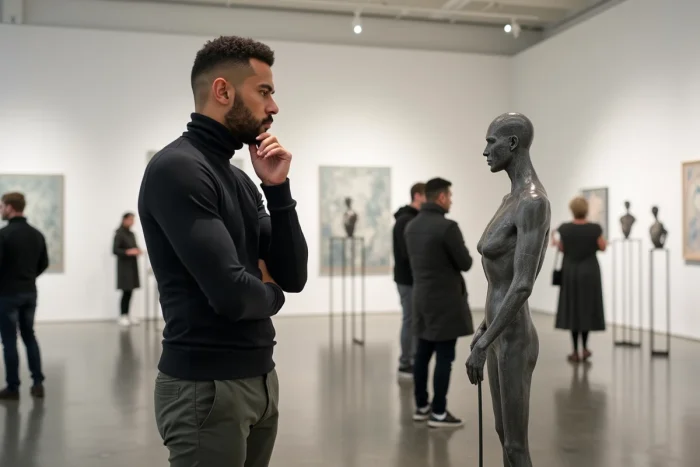
For those visiting an exhibition at the Centre Pompidou or in a Frac in the region, the direct consequence is a visible renewal of the programming. The displays now mix recognized artists with creators for whom this is sometimes their first institutional presentation.
The museum no longer simply dedicates itself to already established careers, it actively participates in the launches of new talents. This shift modifies the relationship between the visitor and the artwork: one no longer comes just to see “already validated” pieces, but discovers proposals in the process of maturation.
Pass Culture and Artist Residencies: The Role of French Cultural Policy
Since 2022, reforms around the Pass Culture and artistic education programs have led to a multiplication of partnerships between high schools, art schools, and contemporary art centers. Emerging artists thus gain access to residencies and public presentations that they would not have obtained otherwise.
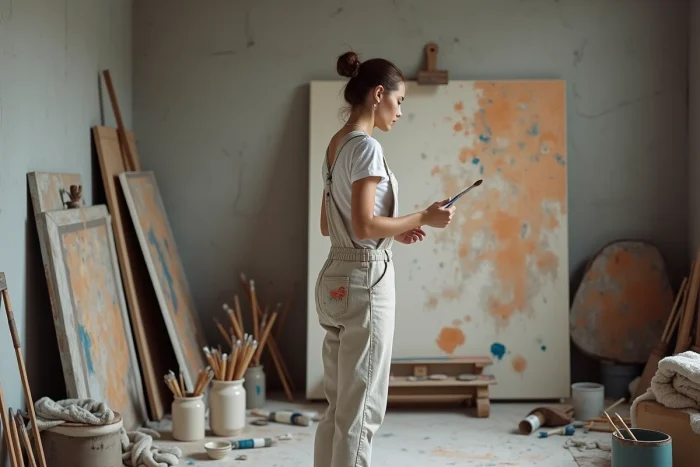
The mechanism is simple. A Frac or an art center receives targeted funding to host an artist for several weeks. The artist works on-site, meets school audiences, and produces works in situ. At the end of the residency, an open restitution allows the public to see the work created.
- Territorial residencies associate an artist with a living space (holiday village, neighborhood, school) to anchor creation in a specific local context.
- Open workshops allow the public to follow the ongoing creative process, not just the final result exhibited in a gallery.
- Partnerships with art schools provide students with direct access to the professional networks of the art centers that host them.
These initiatives make contemporary art accessible outside major metropolitan areas. A teenager using their Pass Culture to visit an artist’s studio in residence in their city discovers a reality of creation very different from the elitist image often associated with the art world.
Contemporary Art and Digital Tools: A Structural Transformation
Since 2021, the integration of digital tools into the paths of emerging artists has become significantly structured. It is no longer just about having a social media account. Online galleries, digital catalogs, and virtual exhibition tours have become full-fledged dissemination channels.
An artist exhibiting in a physical space in Lyon or Marseille can simultaneously make their works visible to a collector in Seoul or São Paulo. Geography no longer solely determines an artist’s career.
What Digital Does Not Replace
The physical encounter with a work remains a moment that the screen cannot replicate. The texture of a painting, the scale of a sculpture, the sound ambiance of an installation: these elements disappear in a digital reproduction. Galleries and museums have understood this. Online tools serve to identify and select, but the decision to purchase or the aesthetic shock almost always happens on-site.
Visiting a group exhibition in an art center, pushing open the door of a studio during open house days, or attending a regional fair remain the best ways to understand what is happening in contemporary creation. Digital tools broaden the field of vision; they do not replace the gaze.