
Unusual Units of Measurement: How to Navigate Everyday Language
In France, the distance traveled by light in an infinitesimal fraction of a second defines the meter. Yet, the foot, the cubit, or the pint persist in language and habits, blurring the precision sought by the international system. The simultaneous use of official measurements and vernacular units leads to errors, misunderstandings, and sometimes economic consequences. No uniformity has ever truly prevailed, even after centuries of attempts at harmonization. Measurement systems intersect, imposing constant trade-offs between scientific rigor and practices rooted in daily life.
Why do measurement units elude us? Origins, evolutions, and stakes in daily life
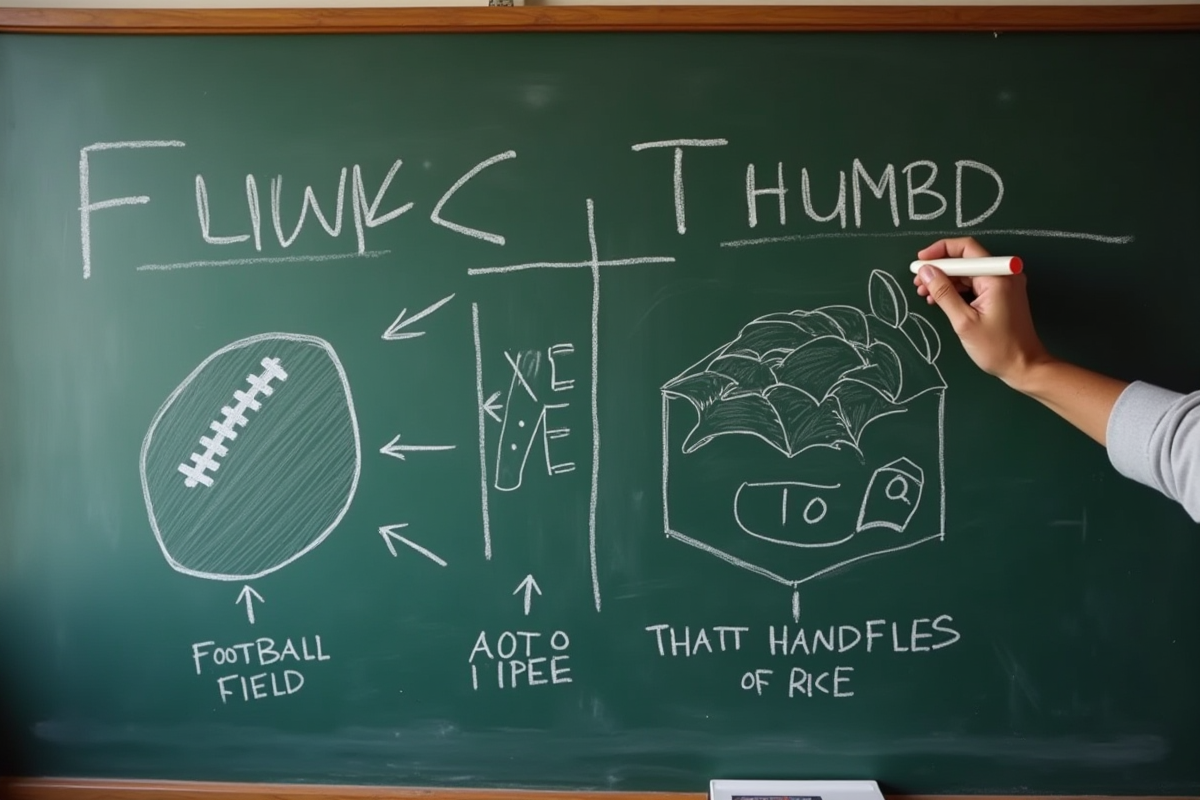
The multiplication of curious measurement units is no accident. It reveals a fragile balance between the pursuit of accuracy and the persistence of inherited habits. The international system of units, designed to serve science and industry, struggles to fully penetrate everyday life. The proof: who has never oriented themselves using “football fields” or “Eiffel Towers” rather than hectares or hundreds of meters? This practice is not new; it shapes our way of making sense of numbers.
Uses vary from one context to another. In markets, in classrooms, people often refer to ares rather than square meters. Many then wonder how to convert from the familiar unit to the official one. To clear up the ambiguity, resources exist, such as 1 are to m², which offers a clear explanation. But this wide gap between units, this somewhat anarchic coexistence, accompanies us in everyday life. Sometimes we prefer to manipulate concrete references rather than raw values, a matter of proximity.
| Metaphorical Unit | Domain | Value |
|---|---|---|
| Eiffel Tower | height | 324 m |
| Football field | area | 7140 m² |
| Boeing 747 | wingspan | 59.6 to 68.5 m |
In reality, converting from one to the other is far from instinctive. Mass, volume, size, format: points of comparison constantly diverge. Children juggle with the logic of the metric system at school, then find themselves choosing a bouquet of flowers “as voluminous as three bottles of water” or a pizza “as big as a plate.” This mosaic perpetuates a rich, vibrant culture of measurement that is quite difficult to confine to official numbers alone.
When sociology enters our conversions: rethinking the meaning of unusual measurements through usage
Never purely technical, a measurement unit intertwines with our collective stories and representations. In Paris, the Eiffel Tower, at 324 meters, stands as a vertical landmark: it is used to literally give height to a statistic about a building or a construction site. The area of a football field (about 7,140 m²) becomes familiar, marking media comparisons and transforming abstraction into evidence. The Olympic swimming pool winks at gigantic water reserves. As for the Boeing 747, length, weight, capacity: everything creates imagery, everything becomes an excuse to make the vastness or power palpable.
These diverted measurements bring us together. They create accessible equivalences: the banana (17.8 cm) makes people laugh on the Internet, the plate (26 cm in diameter) speaks to everyone, the 500 ml bottle sets the rhythm for calculations of consumption or waste. Even comparisons on a national scale emerge in our conversations: the population of Canada (over 38 million) or the area of Belgium (30,688 km²) set benchmarks in debates.
The range of references doesn’t stop there and extends to other equally vivid examples:
- The weight of an adult elephant is around 5,000 to 7,000 kg.
- A tree can save between 10,000 and 15,000 sheets of paper and capture nearly 48 kg of CO₂ each year.
- The average mass of an adult is 76.7 kg.
Can we stop the flow of these familiar units? Difficult, and ultimately, that’s not the question. If measurement becomes human, if it circulates through objects, symbols, and anecdotes, it is to better anchor itself in our lives. Where numbers become stories, the reference changes everything.